Way back in 2015 I joined the NYC Midnight Flash Fiction Challenge and wrote a sub-1000 word story about a man working in a homeless shelter who was called to do the Lord’s work. And by work, I mean murder. At that time, I’d published my first two books and while I’d sold or given away thousands of copies running free promos, I was still an unknown. The imposter syndrome was crushing. So, I decided that a little competition was what I needed to assure myself that I was, in fact, a terrible writer and that I should just give up. For the challenge, I was given a genre, a location, and one item and had 48 hours to create a story. I went in expecting to fail. Instead, I won that first round in my group.
Now, a group at that time was about thirty people, and I took 15 points with the first story and I believe 7 with the second. Whatever it was, it wasn’t enough to get me to round 3, but I had scored points in both rounds. It encouraged me to finish writing the third book in my Getting Dirty series, and I started working on other book ideas.
After I published Hell or High Water in early 2016, I completed the first draft of what would become A Shade of Winter, and for NaNoWriMo that year I began writing a whole new story, a Contemporary Romance. In 2017 I did another round of the Flash Fiction Challenge and it occurred to me that now that I had all of these weird little stories stored on my hard drive, I should probably do something with them. I just didn’t know what.
In 2018 I continued working on the Contemporary Romance, pulled an old Regency Romance out and reworked that, and did some outlines for other story ideas. In 2020, when the pandemic was creating havoc across the country, I couldn’t concentrate on writing a whole novel and decided to give myself a treat. I’d read horror, learn about how it worked, and then write some horror shorts for NaNo that year. I plotted them out using a seven-beat structure and went to town, writing the most horrible people I could think of. It was cathartic.
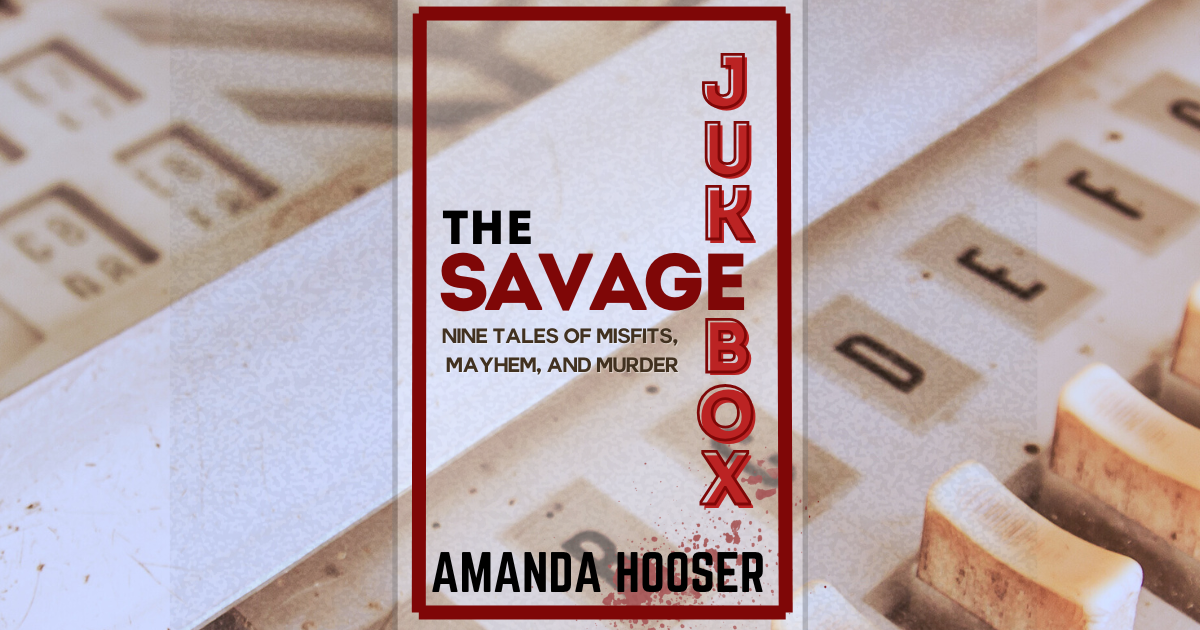
I originally planned to call the series my Jackass Jukebox, but that already existed, so The Savage Jukebox was born. It’s a mix of the flash fiction shorts that have been added to, because writing a 1000-word story is torture, and the planned short stories. It goes live December 16th, 2024, nine years after I wrote that first flash fiction piece that I wanted to share and didn’t know how.
I’ve included that story, Rock Steady, here.
Rock Steady
The moth was back, flitting erratically between his face and the tattered newspaper he’d been reading on the concrete steps. He swatted at it with the paper, turning to watch as it rejoined a variety of nocturnal insects dancing around the naked bulb that presided over the shelter’s back door. With a critical eye, he noted that the faded blue paint was peeling from the door, the ruptured blisters revealing the streaks of rust beneath. One more thing he could add to his to-do list. It wasn’t supposed to rain tomorrow; he might have time after setting the posts for the garden pergola.
The garden, located next to the low-slung block building that housed the Guiding Light Shelter for Men, had been a big part of the reason he’d accepted this job. The abandoned lot, enclosed on three sides by the flat, windowless walls of the surrounding buildings, had been purchased by the shelter and turned into a vegetable garden some years ago. The garden was tended by the men here; they planted, weeded, and harvested a small selection of vegetables. While it provided some variety in the food for the occupants of the shelter, it also gave them a sense of purpose, and the directors loved to tout the therapy aspect of tending growing things. A tall privacy fence separated the lot from the alley to keep out vandals and prying eyes. He’d known as soon as he laid eyes on it that this was the perfect place for him.
The organic smell of the composted horse manure that he’d tilled into the raised beds earlier in the day hung thick in the air as he enjoyed his well-deserved break. He didn’t mind the smell. It was of the earth and served a purpose, just like him. Dropping the paper across his outstretched legs, he pulled a pack of smokes from his breast pocket and lit up his evening cigarette. He leaned back against the iron pipe of the stair rail and took a drag, barely registering the quickening of his heart rate as the smoke filled his lungs. The moth was back again, so he blew the smoke in its direction, chuckling as it fluttered away into the dark. Like people, insects were easily distracted. Blow some smoke and they wander off, no questions asked.
Shaking stray ash from the newspaper, he turned back to the front page, where the smiling face of a pretty, middle-aged woman stared back at him under the headline, “Body Found Under East Bridge.” Disgusted, he wadded the paper before taking another hit on the cigarette. He’d been following this particular story for a few days, a suburban housewife killed in her home. It was a messy killing: blood spatter, shoe prints, hair and fiber samples . . . and now the police had a body. He disapproved of such negligence.
Drawing in the last pull of smoke, he stood and stretched before grinding the butt beneath the heel of his mud-spattered work boot. He picked up the discarded butt, depositing both it and the newspaper into the garbage can next to the stairs. From this angle on the stairs, he could see over the privacy fence, and so he paused for a moment to admire his handiwork. The bare bulb barely cast enough jaundiced light to allow him to make out the large hole he’d just made in one of the raised beds. Brushing the loose dirt from his overalls, he opened the rear door and went back inside. His break was over.
The strong smell of the vinegar solution he used to mop the floors every evening commingled with the aromas of body odor and urine-stained fabric, causing his nostrils to flare. He’d worked there long enough to almost become accustomed to the smell. Almost. The rubber soles of his boots were silent as he walked across the main room, but he suspected that he could be leaving a trail of dirt behind him. He’d mop again when he was done, just in case.
A single row of lights in the open kitchen were kept on at night, but the meager light spilling over the long countertop fell limply onto the cracked green linoleum tiles and cast those that slept here into deep shadow. The headcount tonight was thirty-four, and as he walked past row after row of cots, he nodded in satisfaction; they were all sleeping like the dead. He pulled a pair of nitrile gloves from his back pocket and tugged them on as he listened to their breathing, their soft snores. Everything seemed normal. No adverse reactions.
He’d been hired three years earlier as a sort of combination janitor and bouncer. While the pay was minimum wage, he had his own room, and meals were included. Sometimes, the hopelessness and despair of the shelter’s occupants almost overwhelmed him, but there were happy days and victories to celebrate as well. Rarely did he have to physically remove anyone from the premises, and he spent most of his daytime hours working in the garden or doing maintenance around the place. His favorite part of the day was after the dinner rush, when he could sit down and share a cigarette with someone and get them talking about themselves. The shelter saw a seemingly endless supply of indigent men on their way through to larger cities, where their chances were better. There were a few regulars, but for the most part, the men he worked with stayed for only a few days before moving on. He enjoyed getting to know them, hearing their life stories, their triumphs, and their sins. Especially their sins. He could sense them either way, but he liked to talk with the men face to face before making any decisions.
He stopped walking when he came to the cot where the man who called himself David slept. David was a child molester. He’d known, of course, as soon as he’d shaken David’s hand; it had oozed like a sickness from the man’s pores. Subsequent conversations had confirmed it, even if David had been too smart to admit it outright. He preferred his contributions to confess their sins, but no, David had played coy. Rolling David over, he was happy to see that the GHB he’d slipped into everyone’s juice before bed was still working. The body was slack and malleable. With efficient, well-practiced movements, he stripped off the man’s clothing, wadding David’s stained T-shirt into a ball. Holding it over David’s mouth, he pressed down until the feeble attempts to fight ceased. It was amazing how the body’s will to live could almost bring someone out of a drug-induced coma.
He tossed the shirt onto the floor, followed soon by David’s pants and underlayers. The pile of clothes could be dealt with later—clothing slowed down the decomposition process. With a soft grunt, he maneuvered the body over his shoulder before carrying it across the room, back through the peeling blue door, and out into the garden. Dumping his offering into the hole, he positioned David’s body onto its side to make it fit. Taking a bag of quicklime from his stack of construction supplies, he ripped the paper bag open and poured the contents over the body. It would dissolve soon. No one would notice that there was a bag missing, just like they would never notice a homeless man missing. Rolling the bag into a small ball, he set it aside. He would throw it away along with the clothes before the others woke up. The garbage would be picked up in the morning, and all the evidence would be gone. No blood spatter, no hairs and fibers left lying around. Certainly no corpse just carelessly left out in the open. He picked up his shovel and began pushing dirt over the body, burying the sin.
An offering should never be violent and bloody, he thought, still shoveling. His mission wasn’t to kill innocent people and leave a crime scene behind. No, his was to weed out the evil in society. Some cancers could not be left alone to fester in the dark—they needed to be cut out with surgical precision. Quietly, quickly, and with no trace left behind. For twenty-three years the Good Lord Above had shown him the truth, and he’d done his part, steadfast and unwavering.
Leave a Reply